IEMA response 15/11/2025
Posted by abasiel in Uncategorized.Tags: education, higher-education, learning, teaching, writing
add a comment
| Thanks to (Prof Dr) Mike Moulder for the response below about my recent IEMA posting. I am happy to discuss any research project collaboration by email abasiel@gmail.com Yours, Anthony ~~~~~~~~~~~~~~~~~~~~~~~~~~~~~~~~~~~~~~/ Dr Moulder says: ‘I attend the IEMA sessions and find them very informative. I found your article (University of the Future: What learning designs and systems can support next-generation higher education stakeholders? ) very stimulating. I agree with many of your views and give below my thoughts/ some practical examples of why I agree with your approach. My experience is mainly in the real world as a CFO in multinationals, SMEs and nfp e.g. European Commission plus part time Professor fitting into this career, see my linked in page https://www.linkedin.com/in/mike-moulder-56b84810/?originalSubdomain=uk. I also am now interested in startups and SMEs and deliver workshops e.g. Skills4Startups® Global Business Roadshows (next is in London on 17th November 2025) Since 2010, I have taught in France and the Netherlands and on line to other countries, using workshops where I am a guide on the side rather then a sage on the stage. I say to students that my workshops are not a tick in the degree box but are designed to help them in their careers. I use a workshop approach and keep my applied finance/business strategy to solve real world issues. BUT also, I do not deliver ‘toolkits’ but aim that students adopt a logical, well researched approach to unknown challenges (we have many in the real world!), i.e. as Dawson (2019) suggests: “expert thinking,” meaning “the ability to solve new problems that cannot be solved by rules,” I also think that guidance on research is important – the ability to target relevant information from the tsunami available within a short timeframe, that is what is needed in the real world. My observation is that promotion in many universities hinges on having publications in moribund academic journals (three stars preferred), which from memory Harvard stated as having a readership often of <20. This is not the type of real world research that I am talking about…. I specialise in sharing knowledge inter alia on finance for normal (not financial) people, Applied Finance, Strategic/Business Planning with a financial model, (I have developed a generic financial model to integrate in any business plan). I have used my real world experience to create short case studies that cover most of the applied finance syllabus. I only use workshops as a medium, not lectures: Confucius and later Dale 1954 etc. show that lectures have a poor absorption rate (15%) and retention, just of the title of the lecture, is lost after a few weeks. Workshops, on the other hand, can have absorption rates of 60%+ and long retention times. How? In teams of two, students create a Strategic Plan and financial model from an idea which they have chosen. In a ‘cafetaria’ layout, in groups of four they assign their management roles (chair, scribe researcher etc changed each session) to devise approaches to the real world challenges which I have set them via the case studies. My approach encourages students to work as teams, another real world requirement…getting on with colleagues. When I deliver on line, students are also teamed in groups of four, assigned with roles. I think it is a logical step to go from a cafeteria style workshop to an on line delivery, or working in small groups in remote locations. Issues? I think that the first one is cost. I cannot deliver a workshop to >28 participants, which could be twice the cost of a lecture to 60 students. Cafeteria layouts are also expensive. Second, reluctantly I think that many Professors/Lecturers prefer to be a sage on the stage, they want to be centre stage, and would find it frustrating to have students actively involved in the learning process. I call my students ‘participants’ to emphasise that they are actively involved and to remind me that they pay my salary. I feel that today ‘student’ has a rather negative connotation. Thirdly, unlike in France or Germany for example, Professors/Lecturers often see their career path as being solely within the university. Frankly, this ridiculous. Part of the experience of being a guide on the side is that you have real world experience. I am often in the UK, happy to have a coffee with you, if timetables permit Best regards, (Prof Dr) Mike Moulder’ ~~~~~/ Looking forward to hearing from you. – Anthony |
Free Online Workshop: AI Turing Test using Digital Twins 23/02/2024
Posted by abasiel in Uncategorized.Tags: AI, canada, free, how-to, news, online workshop, webinar, workshop, writing
add a comment
Transforming 360* Immersive Webinar Design to Promote Interactivity: Synthesising Augmented Reality and Artificial Intelligence Agents
Anthony Basiel abasiel@bournemouth.ac.uk, UK
David Wortley david@davidwortley.com, UK
Mike Howarth michael.howarth@mhmvr.co.uk, UK
Steve Humphrey executivetrainerswh@gmail.com, UK
See the video introduction by Dr Anthony Basiel: https://youtu.be/RghF6Pg8-a4
Hello Conference Delegates
You are invited to join us on Thursday 29 Feb. ’24 at 3pm in for our exciting interactive workshop experiment to debate the conference theme through the use of AI digital twins.
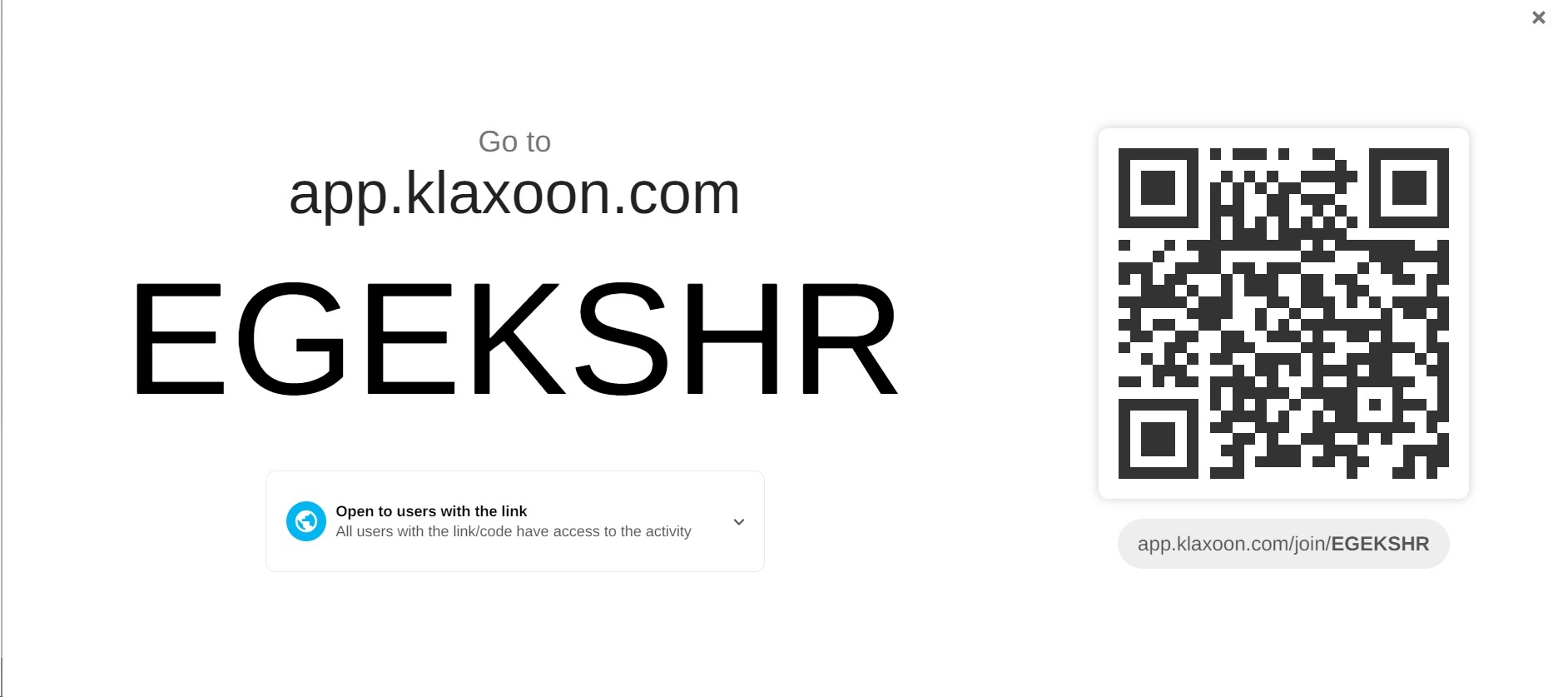
Our next-generation Turing Test gives you the opportunity to vote online to see which presenter is human and who script is AI generated. Have a look at our pre-event activity at: https://app.klaxoon.com/participate/board/EGEKSHR
or scan the QR code below:
 Dr Anthony 'Skip' Basiel - Blended Learning Solutions