4th IEMA Global Event 30/10/2025
Posted by abasiel in Uncategorized.Tags: education, informal-learning, teaching, technology, webinar
1 comment so far

“Global Education Forum 2025: From Tradition to Transformation – Reimagining Relevance, Value, and Skills to Build Adaptive, Purpose-Driven Education Systems that Truly Empower the Future”
Event Concept Note: https://iema.org.uk/IEMA_Event_4_GLOBAL_EDUCATION_FORUM_Concept_Note_30-10-2025.pdf
As a member of the Webinar Keynote Speaker’s Expert Panel I was asked about government or organisational policy with respect to the university of the future.
I will add a weblink to the recording of the session for my full response, but a summary is below:
- The University of the Future will see a shift from the current formal instructional model to embrace informal learning opportunities. My book chapter in the ACPI publication, ‘The University of the Future’ is entitled:
‘What learning designs and systems
can support next-generation higher education stakeholders?‘
You can download the full draft at: https://tinyurl.com/FutureUniversityDesign
or see the video presentation at https://youtube.com/watch?v=poOKnkIPNH8&feature=shared - Government policy and organisational procedures will need to shift from the current top-down model (e.g. Management to Learner) to a bottom-up (Learner-informed curriculum development approach) or Web 2.0 structure.
- This paradigm shift in higher education will recognise the value of informal learning as identified by Lombardo, et al. (1996) with the 70:20:10 Learning Design:
70% challenging (informal) assignments
20% developmental relationships
10% formal learning and development training - The 70:20:10 Webinar design ( See https://abasiel.uk/2020/05/24/702010-webinar-design/ ) is my adaptation of informal learning to an interactive immersive web video conference. The figure below highlights the key elements:

This diagram shows the 3 stages of the 70% (Informal), 20% (Social) and 10% (formal training) being linked to examples of an instructional model. Training may be a ‘talking head’ video lecture. A breakout room discussion can be seen as social learning, while informal learning can happen in an open-ended role-play or online simulation where there is no single ‘correct’ solution to a problem. In each learning design there is a mix of theory related to the topic and how the principles are applied to form a conclusion. This is known as ‘Praxis’ (See https://abasiel.uk/?s=Praxis&searchbutton=go%21 ).
Guest Speakers
One example of informal learning in higher education is seen with the use of guest speakers from industry. There is no set curriculum or learning outcomes to be tested. Rather the ‘Industry Experts’ share real-life experiences from work projects to state lessons learnt or ‘tips to success’. I have successfully hosted monthly podcasts in the past getting positive feedback from stakeholders. You can see a ‘Guest Speaker Proposal’ document at https://tinyurl.com/InformalGuestSpeaker. A sample of my monthly webinar informal interviews with guest speakers can be seen at: https://youtube.com/watch?v=YOT_piG54as&feature=shared for the Learning Zone Talks series.
Please do email abasiel@gmail.com if you are interested in exploring these topics in more detail or if you would like to discuss hosting a webinar workshop for your organisation.
Yours, Dr Anthony Basiel
Free Online Workshop: AI Turing Test using Digital Twins 23/02/2024
Posted by abasiel in Uncategorized.Tags: AI, canada, free, how-to, news, online workshop, webinar, workshop, writing
add a comment
Transforming 360* Immersive Webinar Design to Promote Interactivity: Synthesising Augmented Reality and Artificial Intelligence Agents
Anthony Basiel abasiel@bournemouth.ac.uk, UK
David Wortley david@davidwortley.com, UK
Mike Howarth michael.howarth@mhmvr.co.uk, UK
Steve Humphrey executivetrainerswh@gmail.com, UK
See the video introduction by Dr Anthony Basiel: https://youtu.be/RghF6Pg8-a4
Hello Conference Delegates
You are invited to join us on Thursday 29 Feb. ’24 at 3pm in for our exciting interactive workshop experiment to debate the conference theme through the use of AI digital twins.
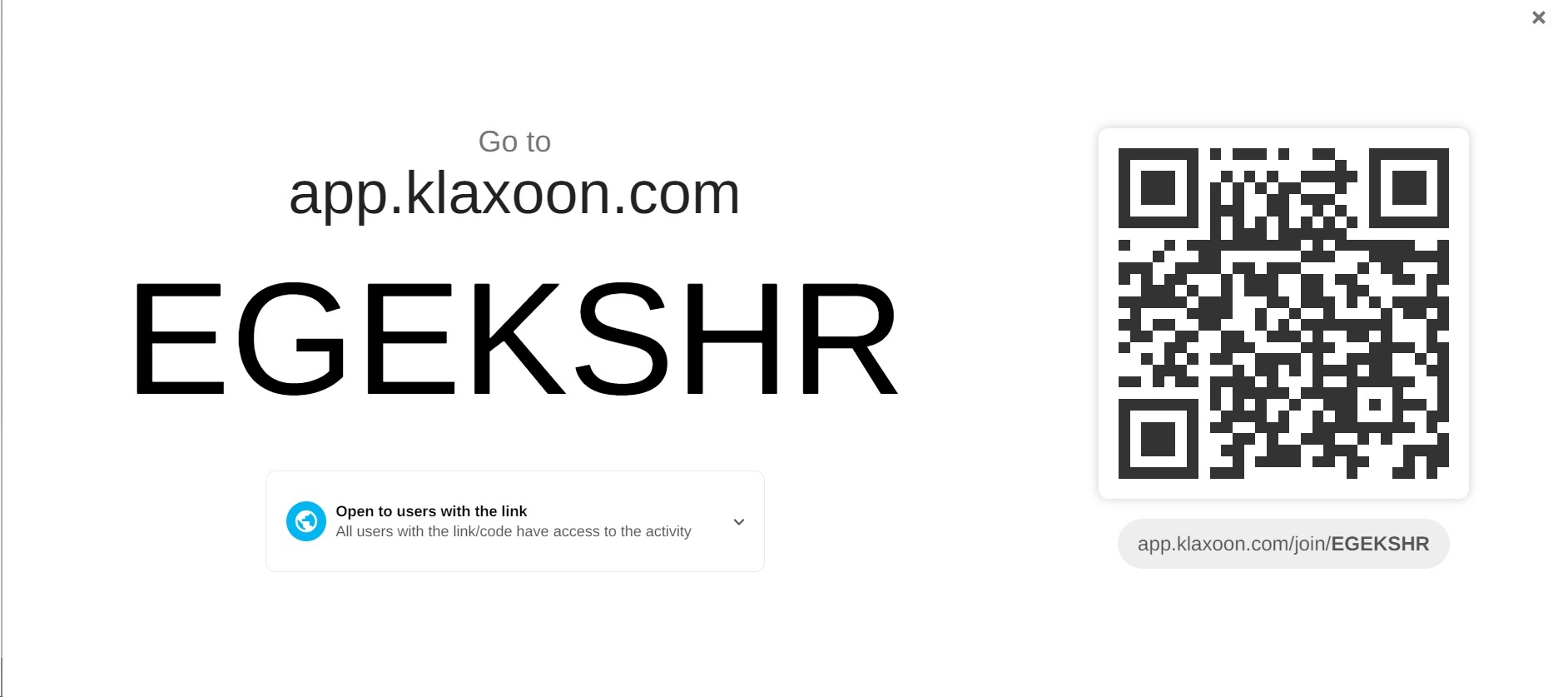
Our next-generation Turing Test gives you the opportunity to vote online to see which presenter is human and who script is AI generated. Have a look at our pre-event activity at: https://app.klaxoon.com/participate/board/EGEKSHR
or scan the QR code below:
Praxis in webinar design 22/04/2021
Posted by abasiel in Uncategorized.Tags: e-learning, learning design, praxis, webinar
add a comment

Praxis in educational webinars
Dr Anthony ‘Skip’ Basiel
abasiel@gmail.com | https://abasiel.wordpress.com
Introduction:
Webinars are fast becoming a fundamental tool for eLearning during the Coronavirus (Basiel A, Howarth M, 2021). This paper explores some elements of webinar design to weave a tapestry of blended learning solutions. We look at the technical and pedagogical components of webinar eLearning. First, the instructional design of an online learning process is discussed. What are the pedagogical ingredients for the eLearning ‘Master Chef’ to apply in a live online educational event? Next, a learning word formula is presented to examine the relationship of the interactions between the learning stakeholders and the process to access the online eLearning event content. Finally, the balance of theory and practice in an eLearning event is offered as a dynamic multimedia tool providing an overview (gestalt) perspective of the 70:20:10 webinar design and its real-world application (Basiel A 2020). The reader is invited to contribute to an on-going virtual discussion and contribute their perspective to help build an online learning community[1].

[1] https://abasiel.wordpress.com/augmentedreality/
Summary Discussion:
This paper has offered several ways to represent the content and processes of an online learning event. The blend of theory and practice is illustrated through a chart to position praxis in the webinar design to support the online facilitator. Connecting these examples together is the 70:20:10 learning model, which sees informal learning as the place where most learning takes place.
Next Generation
Informal learning design can also be a brainstorming session. This may be conducted in a Socratic discussion circle (Basiel A. 2019a). Instead of rows of students or trainees in a traditional ‘sage-on-the-stage’ seating arrangement, there is a circular design. Experts sit in the inner circle to express their views on the discussion topic or problem to be solved. The audience sits in another circle of seats around them. When there is a question, the audience member and the expert being questioned swap seats. In an immersive webinar a 360* video camera is placed in the centre of the circle of chairs to capture all interactions.

 Dr Anthony 'Skip' Basiel - Blended Learning Solutions