Transactional Webinar Design 10/11/2021
Posted by abasiel in Uncategorized.add a comment
Please see the full paper from the introduction and conclusion below at
https://docs.google.com/document/d/1IOoZMrcRCH7XWTNj-NVlaus2jJRAM5vV/edit?usp=sharing&ouid=115658292435481901964&rtpof=true&sd=true
~~~~~~~~~~~~~~~~~~~~~~~~~~~~~~~~~~~~~~~~
iLRN Conference: Transactional Webinar Design
by Anthony Basiel and Mike Howarth April 2020
abasiel@gmail.com | michael.howarth@mhmvr.co.uk
https://abasiel.wordpress.com | http://www.mhmvr.co.uk/
Introduction
During the time of the 2020 Coronavirus, there was an unprecedented increase in web video conferencing for professional and academic use (Business Insider 2020). From the trial-and-error approach used by many organisations, it has become apparent that guidelines for conducting webinars are needed. What are the protocols that can inform webinar design? A theoretical foundation is needed to provide a clear plan forward in the research and development of webinar interaction. This paper puts forward a ‘transactional webinar design’. A starting proposition for any webinar event is for the stakeholders to recognise the nature and degree of self-directedness. In doing so, we are working towards autonomous, self-managed webinar participants and stakeholders. The narrative of this paper moves through a series of questions. First, WHAT are the key factors of a successful webinar? Next, HOW can we blend the tools with the interactive/transactional design? Lastly, WHY would we choose this webinar model?
When engaging in an argument, a starting common language is needed. What do we mean by ‘transactional’? Dewey (1949) explains ‘transaction’ in an education context, as the individual’s pattern of behaviour in an environment. The webinar virtual 2D space is addressed in this paper. According to Moore (1997) the separation of [stakeholders] is sufficiently significant that special [engagement] strategies and techniques are needed.
This webinar analysis begins by looking at WHAT elements comprise a successful event and the related evaluation criteria. This section starts with the technical components and moves to examine the stakeholder’s profiles. When hosting or attending a webinar, is there a clear model of the expectations of the participants? Is there an inherent expectation for the interactions to be identical to a face-to-face discussion, classroom lecture, seminar debate, role-play enactment, or unstructured brainstorming? This expectation needs to be explicit so there is a criteria to measure success. In this way, there is a benchmark to form the ‘transactional webinar design’.
Conclusion
This paper investigated three questions in relation to webinar design:
- WHAT are the key factors of a successful webinar?
- HOW can we blend the tools with the interactive/transactional design?
- WHY would we choose this webinar model?
For a variety of learning environments, Moore (1997) suggests that distance learning requires changes in the traditional role of teachers to be able to select media for (webinar) instruction. This paper has shown these key issues:
- Successful webinars require technical and pedagogic blending depending on the profile of the stakeholders,
- The degree of learner autonomy is related to the instructional design,
- The next-generation of webinar design may move from the current 2D (outside-looking-in) view to include a 3D immersive (inside-looking-out) perspective,
- Webinar pedagogy can provide learning opportunities from traditional Behaviourist instructional design to Humanists creative brainstorming,
- One approach to addressing ‘learning entropy’ in a large Socratic webinar discussion can be to use techniques such as a fishbone diagram,
- The Transactional Webinar Profile Toolkit (2020), provided in this research, gives the reader software to apply Moore’s Transactional Distance Theory to a real-world webinar event,
- Ongoing evaluation needs to be part of the webinar design.
By building a virtual learning community researching webinar design, we can progress towards the next-generation pedagogies and technology blends presented in this paper. The authors challenge readers to contact them to provide case study feedback on the results of using the Transactional Webinar Profile Toolkit and webinar learning theory offered. Through the analysis of the case study examples tends can inform the future designs of webinars. The authors predict a paradigm shift to more creative brainstorming webinars in the near future to promote autonomous learners.
UC Expo – London, Excel 24/09/2021
Posted by abasiel in Uncategorized.add a comment
I will be on an expert panel for the 7 October ’21 discussing the Future University.

You can see the Expo at https://tinyurl.com/4s99v3m4
Please read my book chapter about Blended Learning in the Future University.
Praxis in webinar design 22/04/2021
Posted by abasiel in Uncategorized.Tags: e-learning, learning design, praxis, webinar
add a comment

Praxis in educational webinars
Dr Anthony ‘Skip’ Basiel
abasiel@gmail.com | https://abasiel.wordpress.com
Introduction:
Webinars are fast becoming a fundamental tool for eLearning during the Coronavirus (Basiel A, Howarth M, 2021). This paper explores some elements of webinar design to weave a tapestry of blended learning solutions. We look at the technical and pedagogical components of webinar eLearning. First, the instructional design of an online learning process is discussed. What are the pedagogical ingredients for the eLearning ‘Master Chef’ to apply in a live online educational event? Next, a learning word formula is presented to examine the relationship of the interactions between the learning stakeholders and the process to access the online eLearning event content. Finally, the balance of theory and practice in an eLearning event is offered as a dynamic multimedia tool providing an overview (gestalt) perspective of the 70:20:10 webinar design and its real-world application (Basiel A 2020). The reader is invited to contribute to an on-going virtual discussion and contribute their perspective to help build an online learning community[1].

[1] https://abasiel.wordpress.com/augmentedreality/
Summary Discussion:
This paper has offered several ways to represent the content and processes of an online learning event. The blend of theory and practice is illustrated through a chart to position praxis in the webinar design to support the online facilitator. Connecting these examples together is the 70:20:10 learning model, which sees informal learning as the place where most learning takes place.
Next Generation
Informal learning design can also be a brainstorming session. This may be conducted in a Socratic discussion circle (Basiel A. 2019a). Instead of rows of students or trainees in a traditional ‘sage-on-the-stage’ seating arrangement, there is a circular design. Experts sit in the inner circle to express their views on the discussion topic or problem to be solved. The audience sits in another circle of seats around them. When there is a question, the audience member and the expert being questioned swap seats. In an immersive webinar a 360* video camera is placed in the centre of the circle of chairs to capture all interactions.

Interactive Video: Ipsative Assessment 11/10/2020
Posted by abasiel in Uncategorized.add a comment
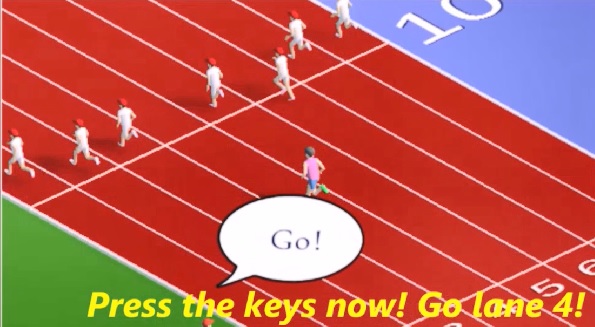
Please see the two YouTube videos that provide an interactive learning experience where you get to control a live online athletics sprint game.
It is in two-parts. You will need to have an online device which has a keyboard so you can control your sprinter using the ‘Left’ and ‘Right’ arrow keys.
You can add to our text discussion board at: https://groups.google.com/g/regent-assessment-forum
Play video 1 of 2: https://youtu.be/2ZyOU5pDzmk
Play video 2 of 2: https://youtu.be/wkpxOuMzj-g
The feedback form below will help us improve the videos. Please do send comment. Thanks, Dr Anthony ‘Skip’ Basiel


Engaging with and Empowering Employees, Customers and Communities 27/08/2020
Posted by abasiel in Uncategorized.add a comment
Stephen Citron is preparing to publish a new book. Included is a chapter about an eLearning project done with my colleague, Dr. Mike Howarth – ‘Work Based Learning Wednesdays – Monthly Webinar Project’. Here is a brief draft epilogue:
Beyond Work Based Learning Webinars
Dr Anthony ‘Skip’ Basiel August 2020
The Work Based Learning Wednesdays Webinar Project was ahead of its time. We hosted monthly webinar interviews with Middlesex University Alumni to unearth ‘tips to success’ from action projects done in their organisations. Along with the live webcast, we had a phone-in option and live text chat for questions or comments. Volunteer students supported the event as webinar facilitators, digital video recorders and editors. eLearning and eMarketing video testimonials were project deliverables.
The project was so innovative that the Deputy Vice-Chancellor extended the model to include the Deans of each Faculty to share good practice and build a virtual community. Additionally, the project was given inter/national recognition through publications and the Peer Awards.
How has the WBL Wednesdays webinar model evolved to address current online learners’ needs during the Coronavirus in 2020? We have embraced a paradigm shift from an interview design to an immersive Socratic discussion model using 360* video augmented reality. Experts sit in a circle promoting brainstorming and creativity to solve a problem or address an issue. The face-to-face audience sitting in the next circle out, swap seats with the Experts when asking a question. The 360* video camera records the event while a live webinar engages the virtual audience through live text discussion facilitated by the host. All audio is converted to auto-text transcripts and tag clouds. Participants are encouraged to use smartphones to record or webcast the event from their perspective using a meta-film approach[1]. Readers are encouraged to explore the ‘Immersive Fishbowl Webinar Design’ at https://abasiel.wordpress.com/elearning-r-d/.
[1] https://youtu.be/TQXk2sHItmk , https://drive.google.com/open?id=1_FtlGNw3xU8TNmYwhQpUaf_PGNJY82Dm
The SAGE Handbook of Learning and Work 20/06/2020
Posted by abasiel in Uncategorized.Tags: academic review, proofreading, Sage publishing
add a comment
A critical chapter review by Dr Anthony ‘Skip’ Basiel
The overall handbook intro and aim is:
The first two decades of the 21st century have contributed a growing body of research, theorisation and empirical studies on learning and work. In this, the third decade of the 21st Century, work is changing rapidly around us, leading to many challenges. and issues. This Handbook takes the consideration of learning and work into a new realm.
As an External Academic Reviewer for the Chapter:
Digitalization of work: Challenges for workplace learning
Christian Harteis, Michael Goller & Karl-Heinz Gerholz,
I have provided a critical summary based on the Sage feedback rubric.
If you would like to have an academic publication reviewed, please contact me at abasiel@gmail.com
ucisa DCG-DEG Spotlight Webinars 2020 06/06/2020
Posted by abasiel in Uncategorized.add a comment
Webinar Design to Promote Quality Engagement: Towards a Transactional Model and Toolkit
Date: Wednesday 1st July (Recording information below)
Interactive video has grown over the last decade to engage learners through a range of instructional designs and supporting technologies. Webinars are now commonplace, but as with early eLearning pedagogy, a ‘talking head’ design falls short of meeting the potential of the media. Next-generation learners need to master virtual collaboration skills to construct solutions to higher-level problem solving using interactive webinars.
How do academics, instructional designers and students design and use webinars to construct new knowledge through social meaning making? The Webinar Profile Toolkit is a methodology and toolkit aimed at providing distance learning stakeholders with the techniques and resources to construct their own effective webinars. First, we look at WHAT are the main features of a webinar? Next, WHAT possible instructional designs and Web Video Hard/Soft Skills are developed. Then, we look at WHY a webinar model linked to Transactional Distance can be a way forward to promote autonomous, creative learners. A software toolkit will be used as part of this ‘hands-on’ workshop to give participants to apply their learning.
This is an action-packed 60-minute workshop that promises to stretch your understanding of how to engage learning through a webinar. Be ready to do some pre-event tasks, collaborate with fellow ‘webinerds’ through Socratic ‘fishbowl discussion. And make smartphone recordings from your own room to share your reflections on the event.
The PowerPoint slides are available to download and you can see the ‘bad example video’ https://youtu.be/X09GCZ1FZgM – The Webinar Profile Toolkit can be downloaded so you can use it for your next video. Please email a copy back to me to discuss the Transaction Distance Model at abasiel@gmail.com
City of Westminster College Webinar Forum 29/05/2020
Posted by abasiel in Uncategorized.add a comment
On Friday 22 May, Dr Mike Howarth was hosted by Esam Baboukhan, of the City of Westminster College with me as Facilitator. The interactive session covered valuable and important topics around video for eLearning. Please see our YouTube video:
We encourage anyone who is hosting or presenting a webinar to look at our paper on ‘Transactional Webinar Design’ at https://abasiel.wordpress.com/2020/04/16/transactional-webinar-design/
and try out our online toolkit form to create a profile or self-assessment of your webinar at: https://abasiel.wordpress.com/awards/
Happy to hear from you by email at abasiel@gmail.com
360* Webinars: spacial awareness 24/05/2020
Posted by abasiel in Uncategorized.add a comment
Please see this video in relation to spacial awareness in a webinar using a Socartic discussion or fishbowl design.
70:20:10 Webinar Design 24/05/2020
Posted by abasiel in Uncategorized.1 comment so far
Welcome to this blog about the 70:20:10 Webinar Design.
Full paper is at https://drive.google.com/file/d/1_TXqkLqT5yhNWbtSWrJde0aQr2nIxy-m/view?usp=sharing
If you have come to this page from the QR code link in the research paper, well done! You are on your way to the next stage of the augmented reality (AR) treasure hunt. Click the YouTube video below to experience a 360* video. This is discussed in the paper at the end.
~~~~~~~~~~~~~~~~~~~~~~~~~~~~~~~~~~~~~~~~~~~~~~~~~~.
This blog explores the application and adaption of the 70:20:10 Corporate Training Instructional Design Model to a Webinar context. Part of this discussion examines the ways in which ‘Guest Speakers’ can be used in the context of webinars. Please see a ‘Guest Speaker’ proposal here:
https://drive.google.com/file/d/10YLxnPZeP94QAZsaMTlswM6C8883r3cv/view?usp=sharing

Dr Anthony ‘Skip’ Basiel
Introduction:
In the mid-90s Lombardo, et al. (1996) conducted a survey with almost 200 executives through the Center for Creative Leadership about their learning philosophy. The unexpected results have come to be known as the 70:20:10 learning and development model:
- 70% challenging (informal) assignments
- 20% developmental relationships
- 10% formal learning and development training
The conclusion is that the great majority of our learning is experiential, grown from our tacit (applied) knowledge while 20% is social through peer-to-peer interactions, mentoring or feedback/feedforward comments.
A problem faced during the Coronavirus is that a lock-down situation we are in social isolation. Our synchronous (live) online interactions are via text chats and web video conferencing. This chapter addresses the question, ‘How can we adapt the 70:20:10 (face-to-face) model to webinar design?’ We will travel in reverse order, starting with formal teaching and training using current webinar technology to support short-term recall of procedural knowledge (the 10%). Next, we will discuss and analyse webinar designs that promote social learning opportunities. Lastly, suggestions of challenging assignments linked to tacit knowledge are explored. We conclude with an examination of the application of a Socratic discussion to a 360* immersive fishbowl webinar design (Basiel 2020). A Webinar Profile Toolkit (2020) offers Event Hosts / Presenters guidelines based upon Moore’s Transactional Distance Theory (1997).
 Dr Anthony 'Skip' Basiel - Blended Learning Solutions