York SJ – Computing Science Event 05/06/2025
Posted by abasiel in Uncategorized.add a comment
I am working as a Visiting Lecturer at York Saint John in the School of Computing Science. Please see the event below with experts from Google and IBM. Hope to see you there! – Anthony

SchoRes ICSSH 2025 21/04/2025
Posted by abasiel in Uncategorized.Tags: AI, artificial-intelligence, education, teaching, technology
1 comment so far

SchoRes International Conference on Social Sciences & Humanities
I have been asked to be keynote speaker at this conference. See https://www.schores.org/conferences_details.php?acid=124
Here is the abstract and conclusion for the paper we are submitting below. Please email abasiel@gmail.com if you would like the full draft paper. This is a sample AI video I made to demonstrate how we can use AI to make a learning simulation:
Abstract
This paper explores the theory and practice of using artificial intelligence (AI) in curriculum and assessment design. The objectives are to apply AI in four stages. First, using AI in a multiple-choice question student-generated pre-test. This helps establish prior or tacit knowledge of the learners and stakeholders. Second, using AI in conjunction with blended learning role-plays or simulations. The third stage uses AI to construct and evaluate a post-simulation debriefing. Finally, in assessment stage four, AI is used to map the learning objectives to the evidence in the video recording transcripts. A case study methodology gathers evidence through surveys, interviews, video recorded observations and AI analysis of transcript text. The study concludes that AI can be integrated into the various stages of curriculum and assessment design in the role of a ‘thought partner’ as well as content producer. In these early days of applying AI to teaching, learning pedagogy and assessment an evidence-based approach to this innovative convergence of technology is recommended.
Keywords: artificial intelligence, assessment, curriculum, debriefing, pre-test, role-play, simulation, transcript evaluation.
- Conclusion
The objectives of this paper are to apply AI in four stages of the curriculum and assessment of learning simulation designs. The first stage used AI in a multiple-choice question student-generated pre-test. Learners answered questions and critically reviewed topics. AI was demonstrated in conjunction with blended learning role-plays or simulations by producing possible scenario descriptions and/or scripts. AI was used to construct and evaluate a post-simulation debriefing script in the next stage of the model learning objectives were linked to key words as evidence to support its use in assessment.
Limitations
The various pilot case studies presented in this paper were conducted with small sample size groups. Further case studies using the 4-stage AI learning simulations model are needed to gather more evidence from cross-disciplinary use.
Recommendations
Each stage of the application of AI to the curriculum and assessment models presented in this paper can be applied to the context of the reader through these recommendations:
- As the pre-test question pool grows, a review of the quality of the MCQs can filter out weaker samples.
- Simulations and role plays can be synthesized with traditional instructional materials to provide learners’ a safe setting to develop knowledge, skills and confidence.
- AI has the potential to support debriefing and reflection on learning through more applications of transcript analysis.
The authors encourage readers to contact them for collaboration opportunities to further research and develop the learning models and technologies introduced in this paper.
AI Certificate 22/03/2025
Posted by abasiel in Uncategorized.add a comment

The UK university that I work at as a Lecturer in Computing user experience (UX) design has started a new initiative to promote AI. They are evaluating an online training certification mini-course. Students and staff can go through a set of text-based materials with supporting videos that have closed captions. This is followed by a traditional multiple choice question (MCQ) quiz. A traditional eTraining instructional design. The assessment is not meant to be ‘open book’, so you should be using your short-term recall of the lesson to answer the questions.
This got me thinking about how AI can be applied in an innovative way to this learning design. Can I copy the question and answer choices into an AI generator to solve the quiz? Is this cheating?
What is the purpose of this training? To verify my understanding of AI content? To motivate me to want to embrace using AI in the university lessons?
How can we actually use AI in the assessment process to apply our knowledge and skills to solve real-world scenarios? Here is the real challenge.
Please see my research in progress to develop an AI Learning Simulation Assessment model at https://abasiel.uk/2024/07/01/4-stage-ai-learning-simulation-model/
Please do email abasiel@gmail.com if you are interested in collaboration. Cheers, Anthony
University of Winchester 12/03/2025
Posted by abasiel in Uncategorized.add a comment
I am pleased to announce that I am now working part-time with the University of Winchester as a Dissertation Project Supervisor.

I look forward to developing curriculum innovation and explore research and development opportunities. Please do email abasiel@gmail.com if you are interested in collaboration.
Elsevier Researcher Academy 03/03/2025
Posted by abasiel in Uncategorized.add a comment

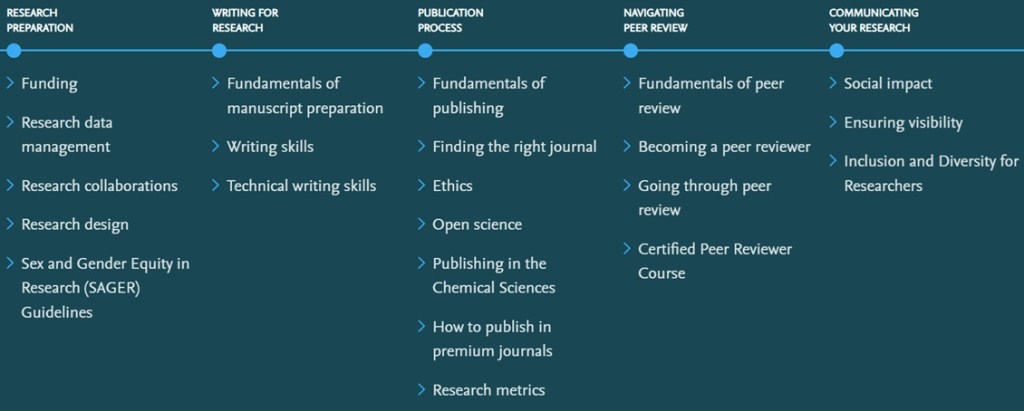
Here is a set of free research resources that can be applied to any subject area or knowledge domain. These can help you write your dissertation project chapters. See https://researcheracademy.elsevier.com/learn
Please email me if you have any questions. – Dr Anthony Basiel abasiel@gmail.com
New book chapter for 2025 01/03/2025
Posted by abasiel in Uncategorized.add a comment

Chapter 1.4 is entitled , ‘Learning Technology Design for Immersive Discussion’. I did this chapter with Dr Mike Howarth. Please email abasiel@gmail.com if you would like to collaborate.
Diagrams to explain the research process 26/02/2025
Posted by abasiel in Uncategorized.add a comment
This short video provides a series of figures to provide support in the stages of conducting and writing up your dissertation research project. These tools can be used for Computing Science User Experience (UX) studies or other generic investigations. Please do email abasiel@gmail.commailto:abasiel@gmail.com with any questions.
This link provides a PDF version of the video slides. – yours, Anthony
User Experience (UX) tools for Hierarchal Task Analysis (HTA) 26/02/2025
Posted by abasiel in Uncategorized.add a comment
This short video provides a set of tools to UX research consultants to gather data for use in analysing your wireframes and prototype UX solutions. This resource also aids in developing and HTA. Please do email me at abasiel@gmail.com with any questions or comments.
You can download the PDF file to get the weblinks to the resources.
Yours, Anthony
Developing a University Business Curriculum for an Entrepreneurship Module 21/02/2025
Posted by abasiel in Uncategorized.add a comment
This post provides resources to anyone interested in developing a university business curriculum. It includes elements such as:
> Scheme of Work
> Learning Outcomes
> Learning Resources
> Assessment Models
You can download the PDF version of the presentation video below. Please do contact me with any questions. I am happy to consult you or your organisation to apply this model. – Dr Anthony ‘Skip’ Basiel abasiel@gmail.com or WhatsApp +44(0)7771998799
This video is 21 minutes long.
Generic Dissertation Project Content Guide 14/02/2025
Posted by abasiel in Uncategorized.add a comment
This video aims to provide support to entering content into a UK university dissertation report document. The structure for the report used in the video is based on one university template. Your university may have different headings, so be sure to check your assessment description. The intent of this resource is to guide you to entering content into the dissertation report so any claims made are backed by evidence. Each section of the report should help map the project SMART objectives through the narrative evidence to support the conclusions. Please do email abasiel@gmail.com subject: Generic Dissertation Guide with any questions. I am happy to collaborate. – Yours, Dr Anthony Basiel
You can download the Word document guide used in the video to use. Click here to access.
You can download the transcript of the video here. Click to access.
 Dr Anthony 'Skip' Basiel - Blended Learning Solutions