Research Projects: From SMART Objectives to Conclusions 19/12/2024
Posted by abasiel in Uncategorized.Tags: data-science, research-conclusions, research-methodology, research-projects, smart-objectives
trackback
Research Project: Start to finish
This is a graphic to show information to story:
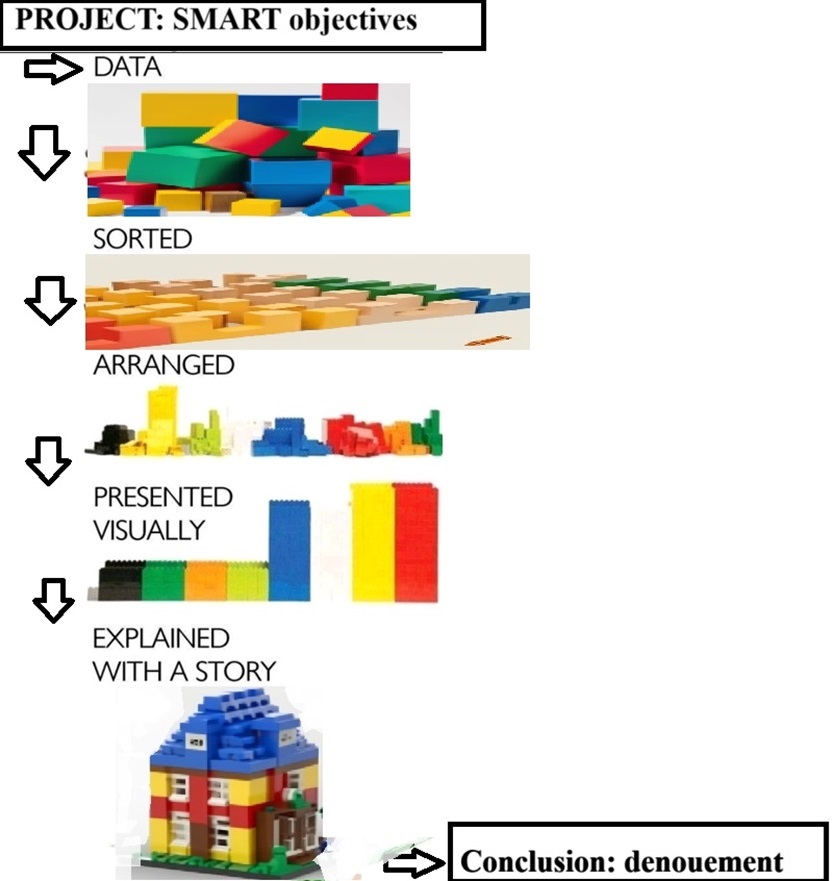
YouTube Summary: https://tinyurl.com/Objectives2Conclusions (c) 2024 Dr Anthony Basiel
Step 1: Identify the project Aims/Goals to refine down to actionable and measurable SMART objectives.
Step 2: Identify the data types e.g. quantitative (numerical) or qualitative (text, images, sound, video, etc.)
Step 3: Thematic analysis – Deductive (theory to patterns) or Inductive (observations to theory)
Step 4: Coding the general themes is the next stage. The data is reorganised and regrouped into new subdivisions.
Step 5: In the report you can represent the findings of the analysis as a table, chart, figure, diagram, or infographic. Links to multimedia can also be used e.g. animation (e.g. Powtoons), video (2D, 360* augmented reality, VR)
Step 6: Starting at a meta-level (e.g. Gestalt overview) using tools such as mind maps or Soft Systems Methodology (SSM – Peter Checkland) you can map out a storyboard from the starting problem or (null) hypothesis to the literature review (e.g. literature review and/or Market Research) to the analysis of the findings using the defined research methodology (approach) to develop and argument for the narrative. This leads to the final step.
Step 7: The conclusion should map the SMART objectives to the supporting data (e.g. desk research -references, primary research -empirical data i.e. survey, interview, recordings, etc.). A summary table linking the SMART objectives to the final conclusions is recommended. This weaving of the story elements (e.g. objectives to data to conclusions) is the denouement of the project.
Download PDF version of the text. (c) 2024 Dr Anthony Basiel
Download the PowerPoint slides of the video below. (c) 2024 Dr Anthony Basiel
(c) 2024 Dr Anthony Basiel
Please do email abasiel@gmail.com if you would like to collaborate.
 Dr Anthony 'Skip' Basiel - Blended Learning Solutions
Comments»
No comments yet — be the first.